
Arrest Warrants in Howard County
A Howard County arrest warrant is permission, in writing, for law enforcement to take someone into custody on a criminal charge. It does not issue on an officer's say-so. The facts have to add up to probable cause first. The charge itself tells you where the case lives and what comes next. Felonies travel through the Circuit Court. A misdemeanor, or certain felonies, can begin in the District Court instead. Keep the arrest warrant separate from any bench warrant that may grow out of the same file later, because one starts with a charge and the other with a missed date. Read the charging document first, always.
How Howard County Police Obtain a Warrant
Howard County shows the sequence in its own reporting. A release dated July 27, 2026 from the Howard County Police Department described obtaining an arrest warrant during a serious felony investigation. The department later reported the warrant was executed once the person was taken into custody. Those releases run in the department's agency pages. Remember who signs, though. A police officer never issues the paper. The department drafts the charging document, and a judge or a District Court Commissioner weighs whether the facts support a summons or a warrant. That review is the legal gate the whole process turns on, and it happens before any arrest is authorized.
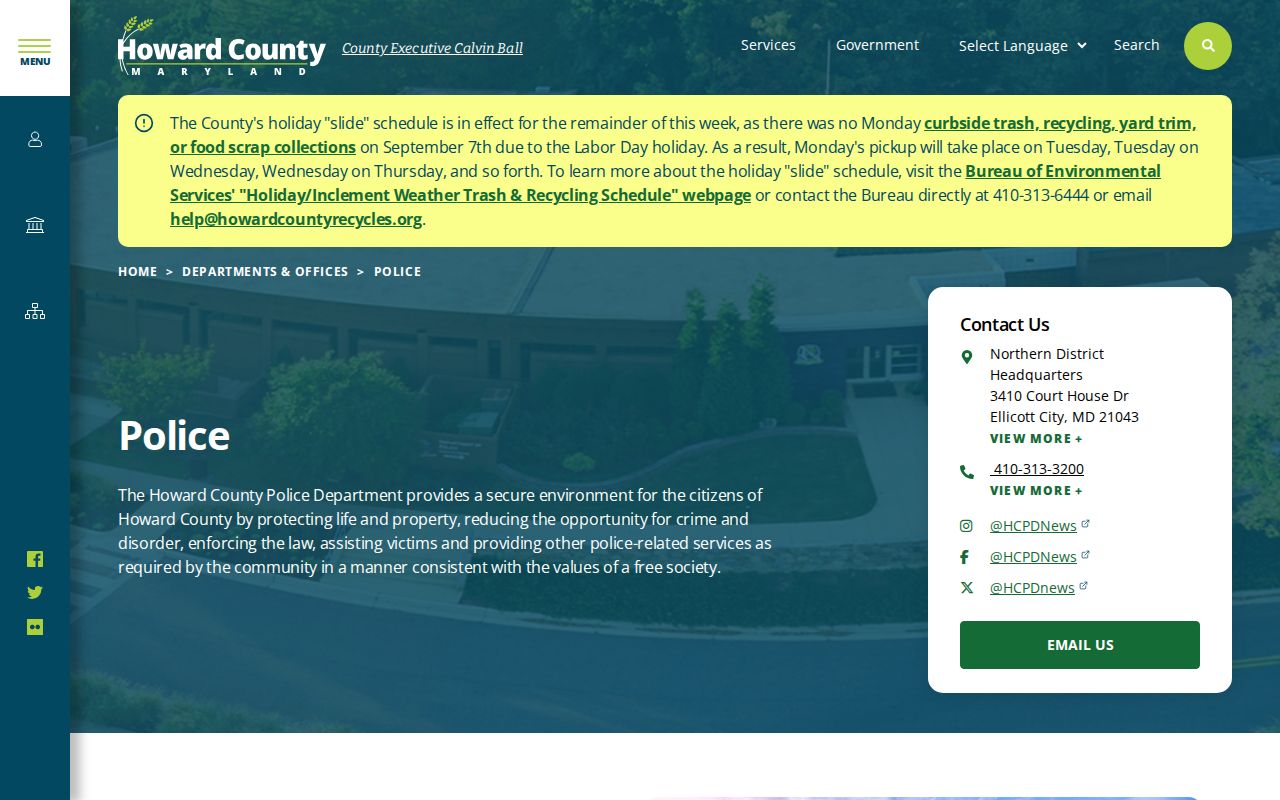
The department's headquarters listing also carries the non-emergency line and the anonymous tip channel.
What a Howard County Arrest Warrant Contains
Howard County publishes no sample warrant entry, so the record's shape comes from Maryland's warrant rules and the fields the public case index exposes. The warrant itself stays a court paper. What a warrant search actually shows is the case wrapped around it, which is where the reader looks.
| Case or Warrant Number | The case identifier. Howard publishes no separate warrant-number format. |
|---|---|
| Charge | The offense and its classification where the record shows one. |
| Issuing Authority | The judge or Commissioner who authorized the process. |
| Affidavit or Complaint | The charging document that supports the probable-cause finding. |
| Issue Date | When the warrant was issued. |
| Service or Return | Whether the warrant has been executed and returned. |
| Bond or Conditions | Release terms when a court sets them; no county bond schedule is published. |
| Status | Outstanding, served, recalled, or otherwise disposed. |
The Howard County Warrant Paper Trail
Maryland's rules of criminal procedure put probable cause at the center of every Howard County warrant decision. The officer's investigation produces facts. Those facts go into a charging document or affidavit, and a judicial officer reviews them before signing anything. Two provisions run on the same standard: the warrantless-arrest rule in Criminal Procedure §2-203 and the search-warrant process in §1-203. The paper trail is why the docket beats rumor. The charging document shows what the judge actually reviewed. The docket entry shows whether the court issued a summons, a warrant, or nothing at all.
How Howard County Arrest Warrants Are Served
Serving a warrant in Howard County splits by court. The sheriff handles Circuit Court criminal process, which covers grand jury indictments, bench warrants, and juvenile warrants. The Howard County Police Department obtains and executes its own warrants, and other agencies pitch in when a wanted person turns up in the county. The sheriff's page adds that its teams work with agencies across Maryland and the country on extraditable fugitives. None of this is scheduled in public. Service can happen at a traffic stop, at a front door, or at the end of a longer investigation, which is exactly why the sheriff keeps its own system. The public index will not tell you when or where an arrest will occur, and a clean search does not mean no warrant exists. Only the issuing court can confirm one.
The 90-Day Rule for Howard County Warrants
Maryland Rule 4-212(d)(3) keeps court files for certain unserved arrest warrants and charging documents closed to public inspection until service or return, or for 90 days, unless the court orders otherwise. That one rule explains many Howard County searches that come back empty while an officer's system still shows an active warrant.
Caution: A blank public search is not proof that no arrest warrant exists. Unserved, sealed, and juvenile files are withheld by rule.
The practical move is simple: call the clerk. Ask whether the file is restricted, then ask what route the Howard County court allows for a person in interest.
Arrest Warrant vs Summons vs Bench Warrant
Three different papers can bring a person before a Maryland court. Only one of them authorizes a custodial arrest from the start, and knowing which is which matters.
| Process | What It Does | How It Starts |
|---|---|---|
| Arrest warrant | Authorizes taking the person into custody | A charge supported by probable cause |
| Summons | Orders an appearance without an arrest | Charging process where the court chooses a summons |
| Bench warrant | Authorizes arrest after a missed obligation | A failure to appear in a pending case |
Serving Howard County Arrest Warrants
Which office serves a Howard County warrant depends on the court and the charge. Each agency publishes its own contact route for exactly that reason.
Sheriff's Office, Warrant/Fugitive Section
9250 Judicial Way, Ellicott City, MD 21043
410-313-4174
Howard County Police Department
3410 Court House Drive, Ellicott City, MD 21043
410-313-3200
Non-emergency: 410-313-2200
District Court Commissioner
7311 Waterloo Road, Jessup, MD 20794
410-313-4740
The Commissioner does not serve process. That office in Howard County handles the initial appearance, advice of rights, and bail after an arrest.
If There Is a Warrant for You
Talk to a lawyer first. Then decide how to appear. Defense counsel can confirm which court holds the case, ask whether the Howard County court permits an arranged appearance, and deal with bond and the underlying charge. What the county does not offer is a walk-in surrender window or a warrant-recall form. So do not assume that showing up at an office will resolve the case or produce an immediate release. The court, not the front desk, decides what happens next.
Important: An active arrest warrant can be executed at any contact with police. Arrange counsel and a plan before that decision is made for you.
After Arrest: Booking to Release Documents
Once a person is in custody, the case moves to booking, then an initial appearance, then bail. Those are the steps the Howard County pages themselves describe.
- Central booking at the Howard County Detention Center processes the arrest.
- A District Court Commissioner handles the initial appearance and advice of rights.
- Bond hearings run Monday through Friday except holidays, and results can be requested at 410-313-5233 after 2:00 p.m. on the hearing day.
- Bond is posted through the Commissioner's Office, which issues release documents to the person posting or the bondsman.
- The release documents go to the detention center Upper Control window in the lobby.
The detention center release page from Howard County says release averages one to two hours after the facility receives the correct documents. Timing still varies.
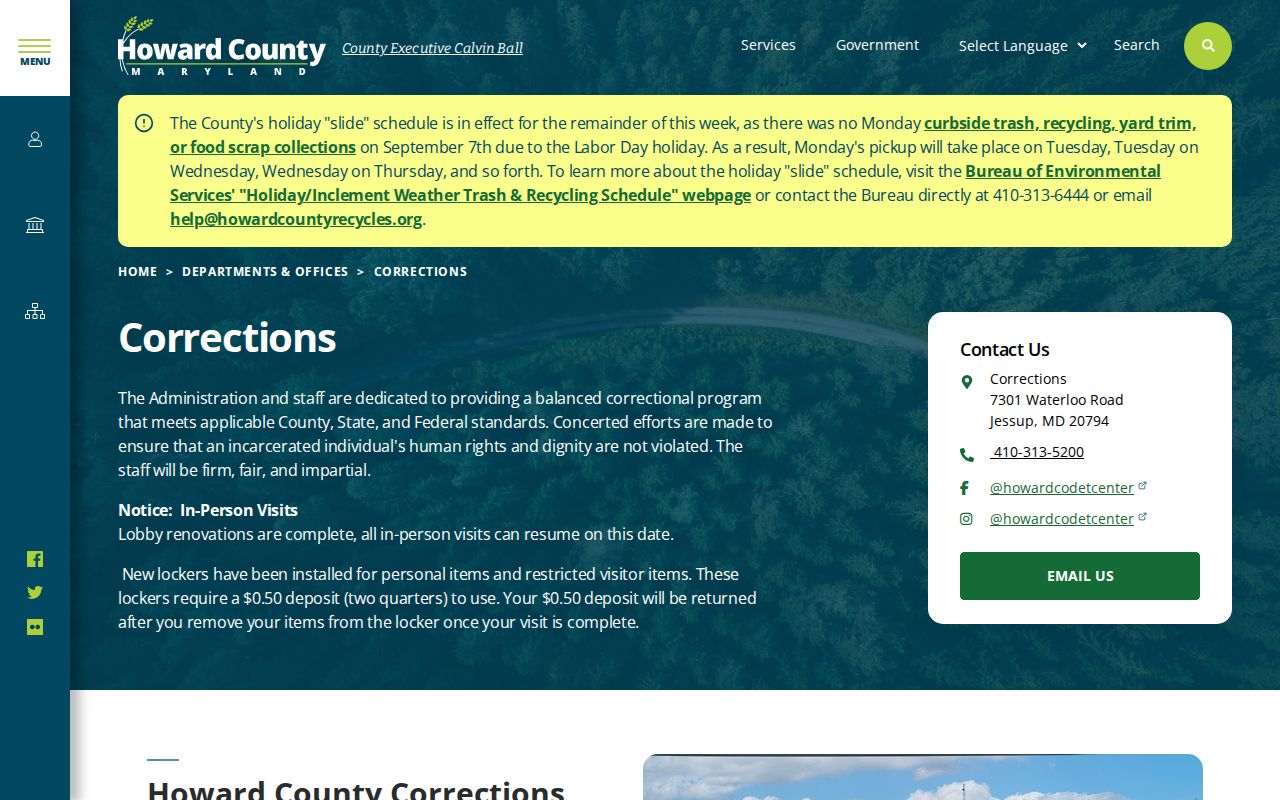
Bond gets a person out of custody. It does not end the charge, and it does not erase the duty to appear in Howard County court.
Federal and Out-of-State Warrants
A federal warrant runs through a different system than a Howard County case. Federal court records, not a county list, are the layer to search. The Howard County sheriff's office can still be involved when a wanted person is believed to be in the county.
| Point | Howard County Warrant | Federal Warrant |
|---|---|---|
| Who issues it | A Maryland judge or Commissioner | A federal judicial officer |
| Who serves it | The sheriff, county police, or an assisting agency | U.S. Marshals or federal agents |
| Where to look | Maryland Judiciary Case Search and the issuing clerk | Federal docket access through PACER |
| Bond process | District Court Commissioner and Maryland court | Federal court detention and release |
Note: A federal warrant may be sealed, and the docket can show the case without showing the warrant, so counsel is the right first call.